250VAC 50A EMI Filter for Clean Power

EMI Feedthrough Filter
December 27, 2025
Category Connection: EMI Feedthrough Filter
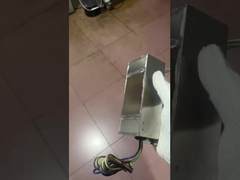
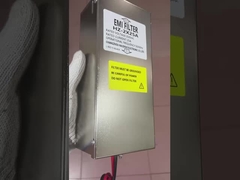
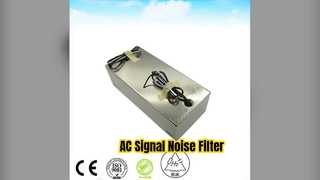
Brief: Need quick answers about practical use? This video highlights the essentials of the 250VAC 50A EMI Filter, demonstrating how it ensures clean power in anechoic chambers and other critical applications. You'll see how this high-current feedthrough capacitor effectively suppresses electromagnetic interference, enhancing signal and power transmission quality for your electronic equipment.
Related Product Features:
  • Rated for 250VAC/600VDC and currents from 1A to 300A, suitable for diverse power systems.
  • Operates effectively at 50/60Hz frequencies within a temperature range of -40°C to +85°C.
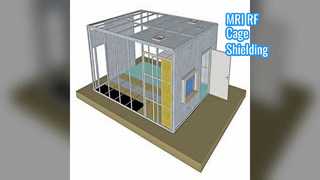
  • Designed as a feedthrough filter capacitor specifically for use in anechoic chambers.
  • Mitigates high-frequency electromagnetic noise from motors, power supplies, and microprocessors.
  • Functions as a low-pass filter using passive components like inductors and capacitors in an LC circuit.
  • Blocks and redirects conducted interference to improve overall system performance and signal quality.
  • Available as a standard model or as a fully customized solution to meet unique application requirements.
  • Custom designs can accommodate voltages up to 480VAC/400VDC and frequencies up to 400Hz.
FAQs:
  • What is the primary application of this 250VAC 50A EMI Filter?
    This EMI filter is primarily used in anechoic chambers and other critical electronic setups to suppress electromagnetic interference (EMI) generated by devices like motors and power supplies, ensuring clean power and signal transmission.
  • Can this EMI filter be customized for specific voltage and current requirements?
    Yes, we offer full-service custom EMI filter solutions. Custom designs can support voltages from 0 to 480 VAC or 0 to 400 VDC, currents from 0 to 400 A, and frequencies up to 400 Hz, with higher ranges available upon request.
  • How does the EMI filter work to reduce electromagnetic noise?
    The filter acts as a low-pass circuit using inductors and capacitors. Inductors block high-frequency noise while allowing low-frequency and DC currents to pass. Capacitors then provide a low-impedance path to divert the noise back to the power supply or ground, effectively canceling conducted interference.